
What Those Bumps on Your Skin Really Are: A Visual Guide
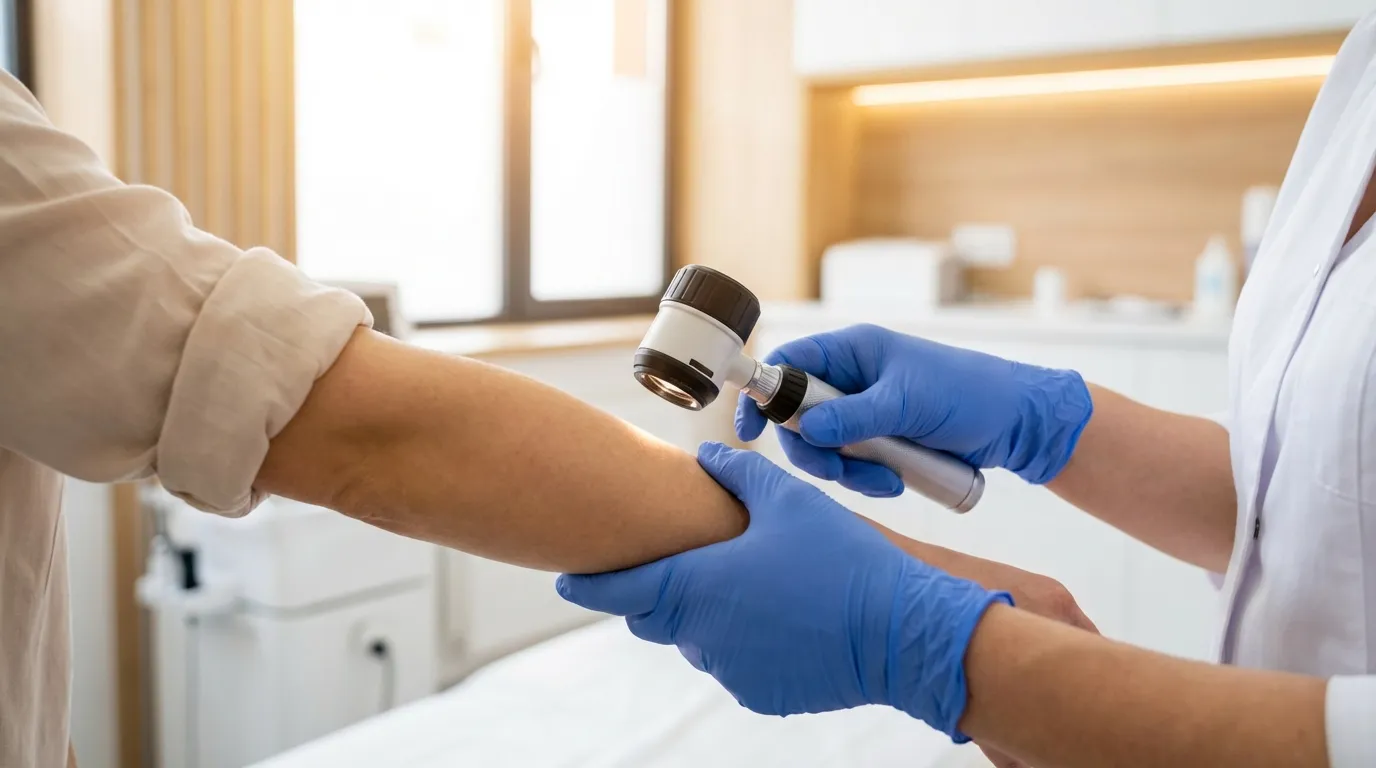
Not sure what a bump is? A dermatologist can tell you in one visit.
Dr. Brady sees adults and children at our Tampa office and can diagnose and, when needed, remove cysts, skin tags and other growths the same day. Most insurance and Medicare accepted.
Every day in our practice, patients come in pointing to a bump and asking, "What is this? Is it cancer? Do I need to worry?" The guide below covers the bumps we see most often. Use it to get oriented, but understand its limits: benign growths and skin cancers overlap in appearance more than most people expect, and a bump that looks textbook-harmless in a photo can be something else entirely under magnification. Basal cell carcinomas are regularly mistaken for pimples that won't heal. Amelanotic melanomas can be pink and featureless. We have diagnosed skin cancer in patients who came in certain they had a harmless cyst.
So read this as background, not as a diagnosis. If you have a bump you are wondering about, the right move is to get it looked at in person. An exam takes a few minutes, we can evaluate it with a dermatoscope, and if there is any question we can biopsy it the same day.
Keratosis Pilaris (KP): "Chicken Skin"
What it looks like: Tiny, flesh-colored or slightly red bumps, usually on the back of the arms. These can also appear on thighs, cheeks, or other areas. The skin feels rough and bumpy, like goosebumps that don't go away.
What it is: KP is a harmless buildup of keratin (a protein) in hair follicles. It's extremely common, affecting up to 40% of the population. It's not contagious, not dangerous, and not cancer.
Is it serious? True KP is not dangerous and doesn't become cancerous. The caveat is that other conditions can look similar, so a rough, bumpy patch is worth confirming rather than assuming.
Treatment options: Exfoliating products containing urea or lactic acid can help smooth the bumps. Moisturizers with glycolic acid or salicylic acid improve appearance. For stubborn cases, we can try retinoids, but results are modest and temporary.
Seborrheic Keratosis: Waxy, Stuck-On Growths
What it looks like: Brown or black raised bumps with a waxy, almost "stuck-on" appearance. They can be flat or dome-shaped and often have a pebbly surface. They increase in number and size with age.
What it is: Seborrheic keratoses are benign growths of skin cells. They're not related to sun exposure and don't turn into skin cancer (though people often confuse them with melanoma).
Is it serious? A confirmed seborrheic keratosis is harmless, though it can become irritated if clothing rubs against it. They are also one of the growths most often confused with melanoma, which is why a new dark, waxy spot should be examined rather than assumed benign.
Treatment options: We can easily remove them with cryotherapy (freezing) or curettage (scraping) if they bother you cosmetically or become irritated. Many people choose to leave them alone.
Cherry Angiomas: Tiny Red Dots
What it looks like: Small, bright red or purple pinpoint bumps, usually 1-4 millimeters in size. They can bleed if picked or traumatized. They're often found on the trunk.
What it is: Cherry angiomas are benign growths of small blood vessels. They increase with age and are extremely common, especially in people over 40.
Is it serious? No. They're harmless and won't become cancer. The main risk is that if you pick at one, it can bleed significantly (because it's just a bundle of tiny blood vessels).
Treatment options: If you don't like them cosmetically or they bleed easily, we can remove them with electrocautery or cryotherapy. Many people leave them alone since they don't pose any health risk.
Milia: Tiny White Bumps
What it looks like: Small, white or yellowish bumps, usually around the eyes, cheeks, or nose. They look like tiny whiteheads but won't pop like pimples.
What it is: Milia are small cysts containing keratin. They form when dead skin cells get trapped under the skin surface. They're extremely common and harmless.
Is it serious? No. They're harmless and won't develop into anything else. Avoid trying to pop them at home, as this can cause infection or scarring.
Treatment options: A dermatologist can extract them, or they can be treated with topical retinoids or light peels. Some milia resolve on their own over time.
Skin Tags: Friction-Related Growths
What it looks like: Small, flesh-colored or brown soft bumps on stalks (pedunculated). Often found in skin folds like the neck, armpits, groin, or under breasts. They can dangle and look concerning, though they're completely benign.
What it is: Skin tags are harmless overgrowths of skin. They form in areas of friction and increase with age, weight gain, and hormonal changes.
Is it serious? No. Skin tags are harmless, though they can be annoying if they catch on clothing or get irritated by rubbing.
Treatment options: We can remove them with cryotherapy, ligation (cutting off blood supply with a small band), or surgical removal. Many people leave them alone unless they cause irritation.
Actinic Keratosis: The One That Needs Attention
What it looks like: Rough, scaly patches, usually red or skin-colored. They feel like sandpaper and are often found on sun-exposed areas like the face, ears, scalp, and hands. They may also be tender.
What it is: Actinic keratoses (AKs) are precancerous lesions caused by sun damage. They're a sign that your skin has taken significant UV damage and is at risk for developing skin cancer.
Is it serious? Yes, this one is important. While not every AK becomes cancer, they're precancerous and have the potential to progress to squamous cell carcinoma if left untreated. If you have AKs, you need to see a dermatologist.
Treatment options: We treat AKs with cryotherapy, topical medications (like 5-fluorouracil or imiquimod), or chemical peels. Treatment not only clears existing AKs but also lowers the chance of new ones forming in the same area.
Molluscum Contagiosum: Pearly Bumps
What it looks like: Small, pearly, dome-shaped bumps with a dimple in the center. Flesh-colored or slightly pink. Usually 2-5 millimeters. Most common in children but can occur in adults.
What it is: Molluscum contagiosum is a viral infection caused by a poxvirus. It's contagious but not serious.
Is it serious? No, it's not dangerous or cancerous. However, it is contagious, so if you have it, avoid sharing towels, razors, or close skin contact with others until treated.
Treatment options: Molluscum often resolves on its own in a few months, but we can speed resolution with cryotherapy, curettage, or topical treatments. Treatment also prevents spread to other areas of your body.
Lipomas: Soft Fatty Lumps
What it looks like: Soft, moveable bumps under the skin. Usually flesh-colored and can range from small to several inches in size. They feel doughy and move freely under the skin.
What it is: Lipomas are benign tumors made of fat cells. They're common and harmless, more common in middle-aged adults.
Is it serious? A true lipoma is benign. Rarely, a deeper soft-tissue tumor can feel similar, so a lump that is firm, fixed in place, growing quickly, or painful should be evaluated rather than watched.
Treatment options: If a lipoma bothers you cosmetically or causes discomfort, it can be surgically removed. Some people choose to leave them alone since they're harmless.
The Bottom Line: Get It Checked
Any bump that is growing, changing color, bleeding, crusting, itching, tender, or simply new to you deserves an in-person look. So does any bump you have been quietly wondering about for a while, even if it has not changed. Waiting rarely makes a lesion easier to treat, and it sometimes makes it harder.
A skin growth cannot be reliably diagnosed by eye alone, by a photo, or by a search engine. It takes an exam, often a dermatoscope, and sometimes a biopsy. If you have something on your skin you are unsure about, book an appointment and let us take a look.
Get Your Bumps Checked
Unsure about a bump on your skin? Schedule a consultation with our dermatology team for a professional diagnosis and personalized treatment plan.
Book Now